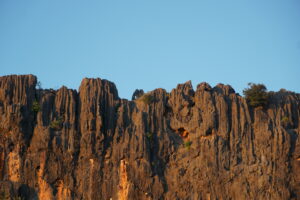
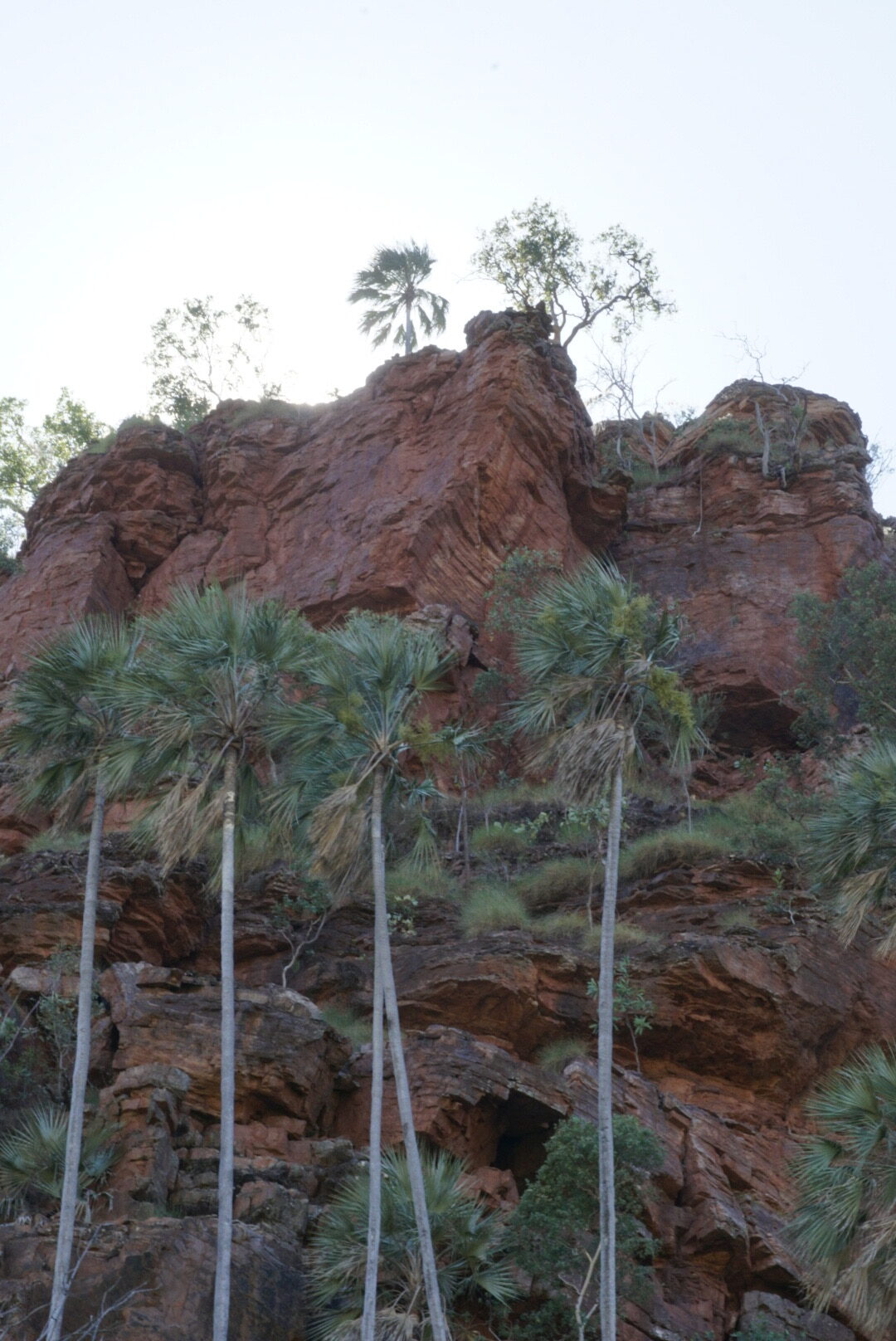
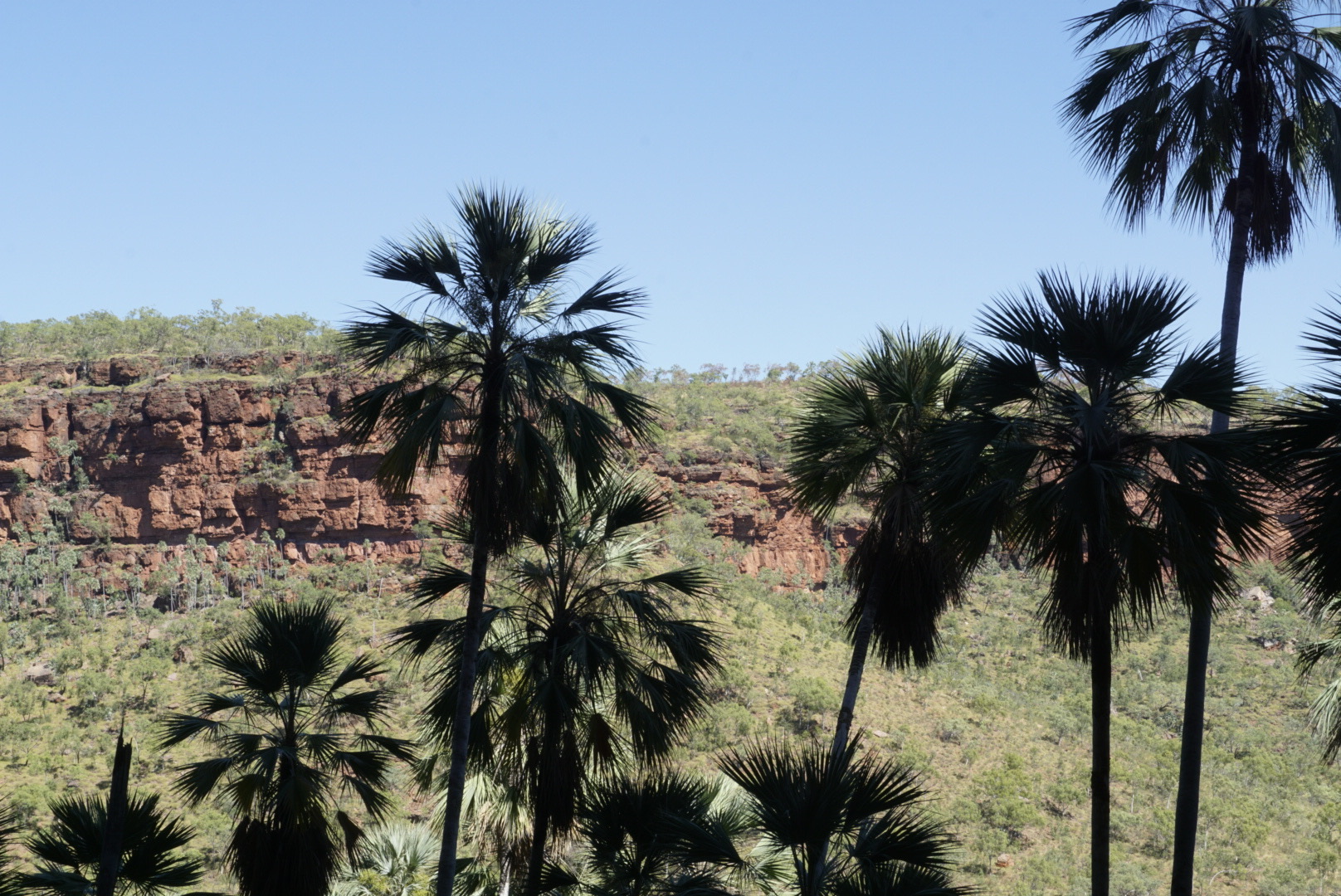
Well I’d done it! I completed the Gibb River Road without a hitch. What a cool feeling that was. I have to say, I was feeling pretty happy to be back on paved roads again. Time for a new adventure! It was officially time to cross over the WA border into the Northern Territory. These next three hundred or so miles would be somewhat familiar to me as I had taken this road when I initially drove to Western Australia during my last trip. It’s a pretty boring drive with the odd road house here and there along the way. I remember thinking that the scenery is interesting because there are areas with red rocky cliffs that have really tall and thin palm trees growing up the side of them. I’d never really seen anything like that before.
I was headed for the city of Darwin and the two national parks in its vicinity. This part of my road trip was kind of a big detour. I wondered if it was really worth the extra cost in fuel and mileage on my car. Of course I ended up deciding that it was. The appeal of it for me was the wildlife (it’s the ultimate croc country) and the Aboriginal culture. I was also curious about Darwin as it seems to be very hit or miss miss with people. I wanted to see what it’s like.
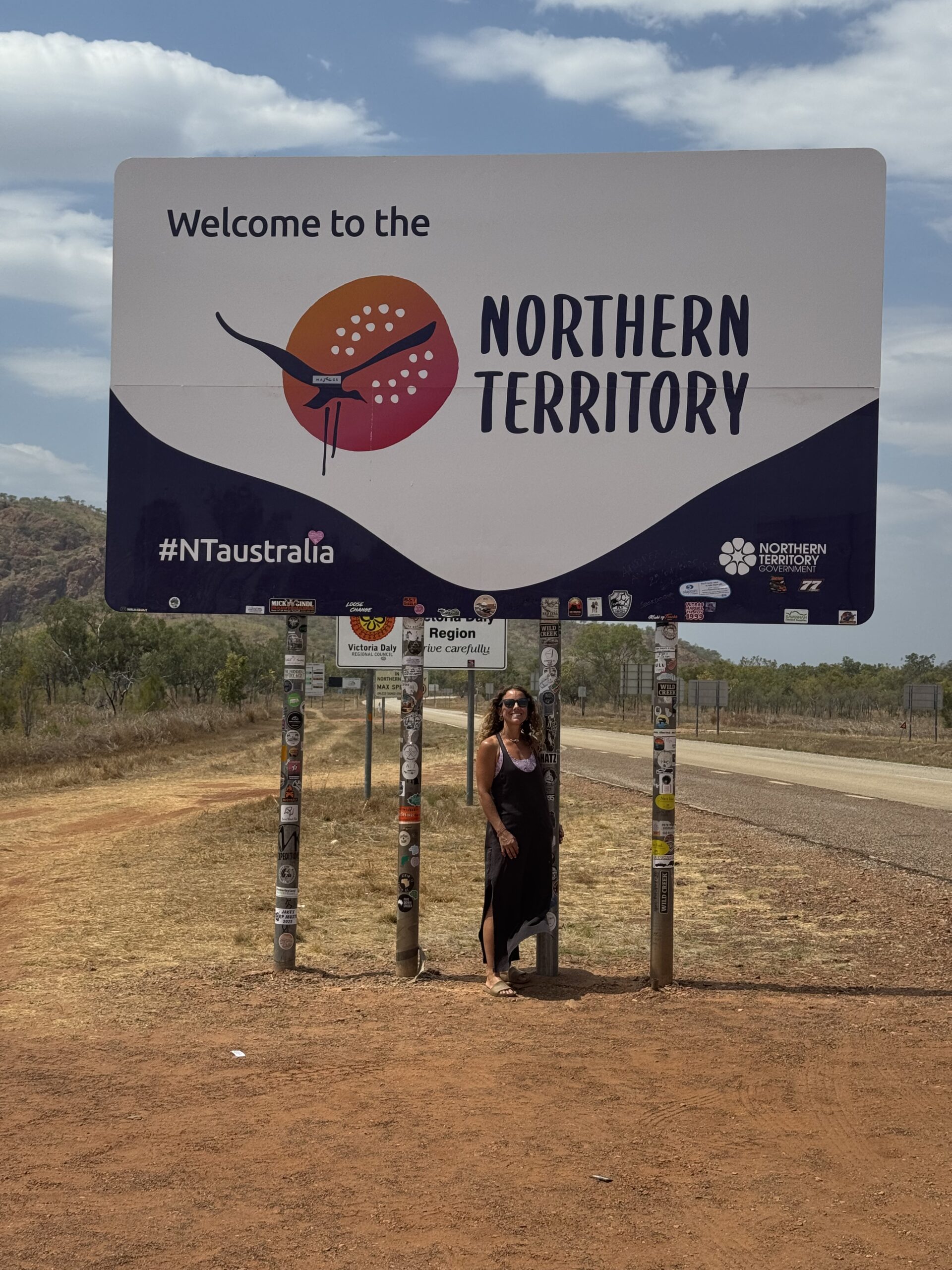
I made it to the Western Australia/Northern Territory border and pulled over to pause for a minute before I drove away. By the way, Western Australia’s slogan is “walking on a dream”. Well, you’ve got that right. I can’t think of a better way to describe it. But alas, it’s time to move on..
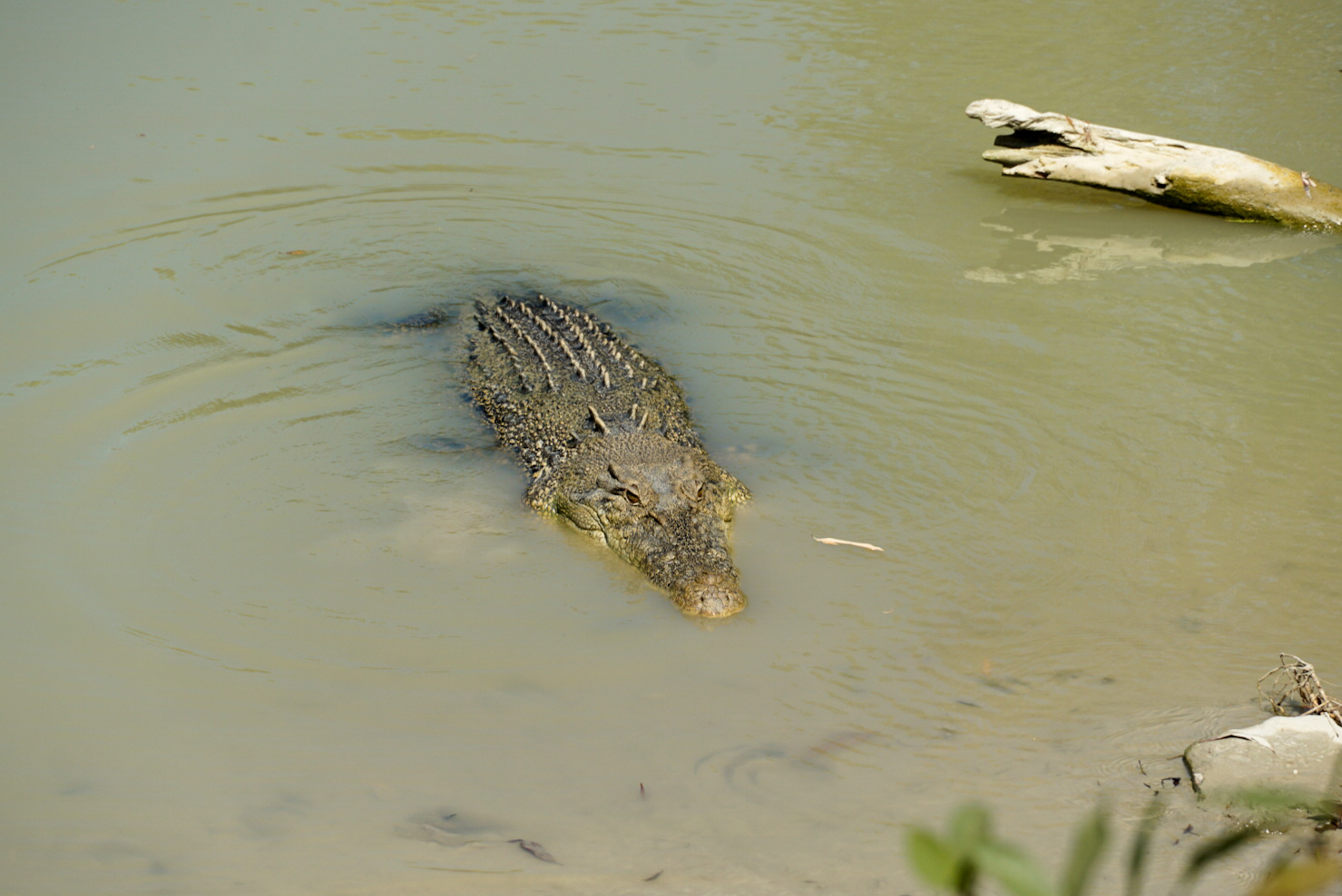
With WA now in my rearview mirror it was about a six hour drive for me to get to my next destination- Kakadu National Park…a World Heritage- listed national park. My main reason for wanting to visit here was to hopefully get a good look at some salt water crocodiles and also because it is a hot spot for Aboriginal culture and rock art.
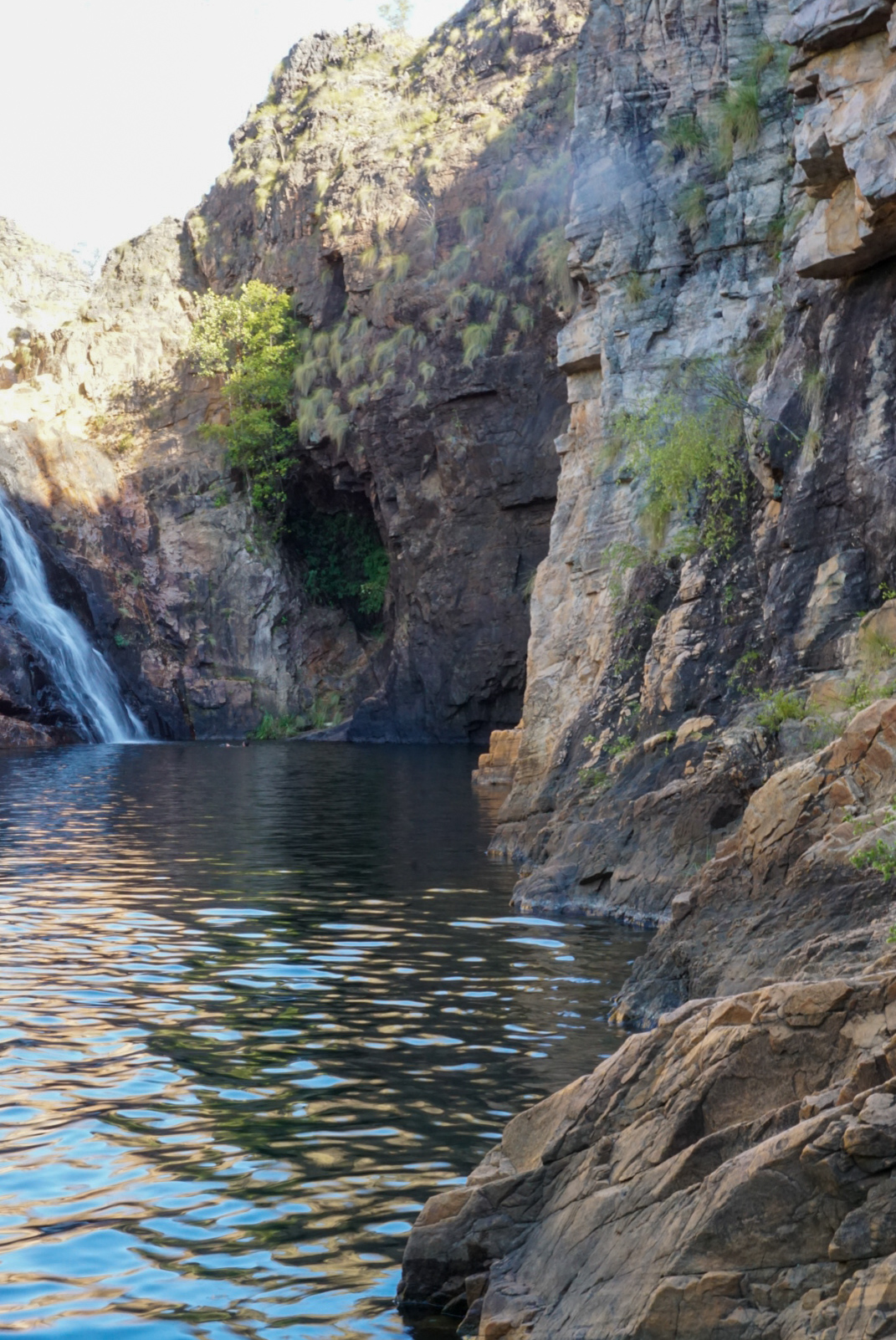
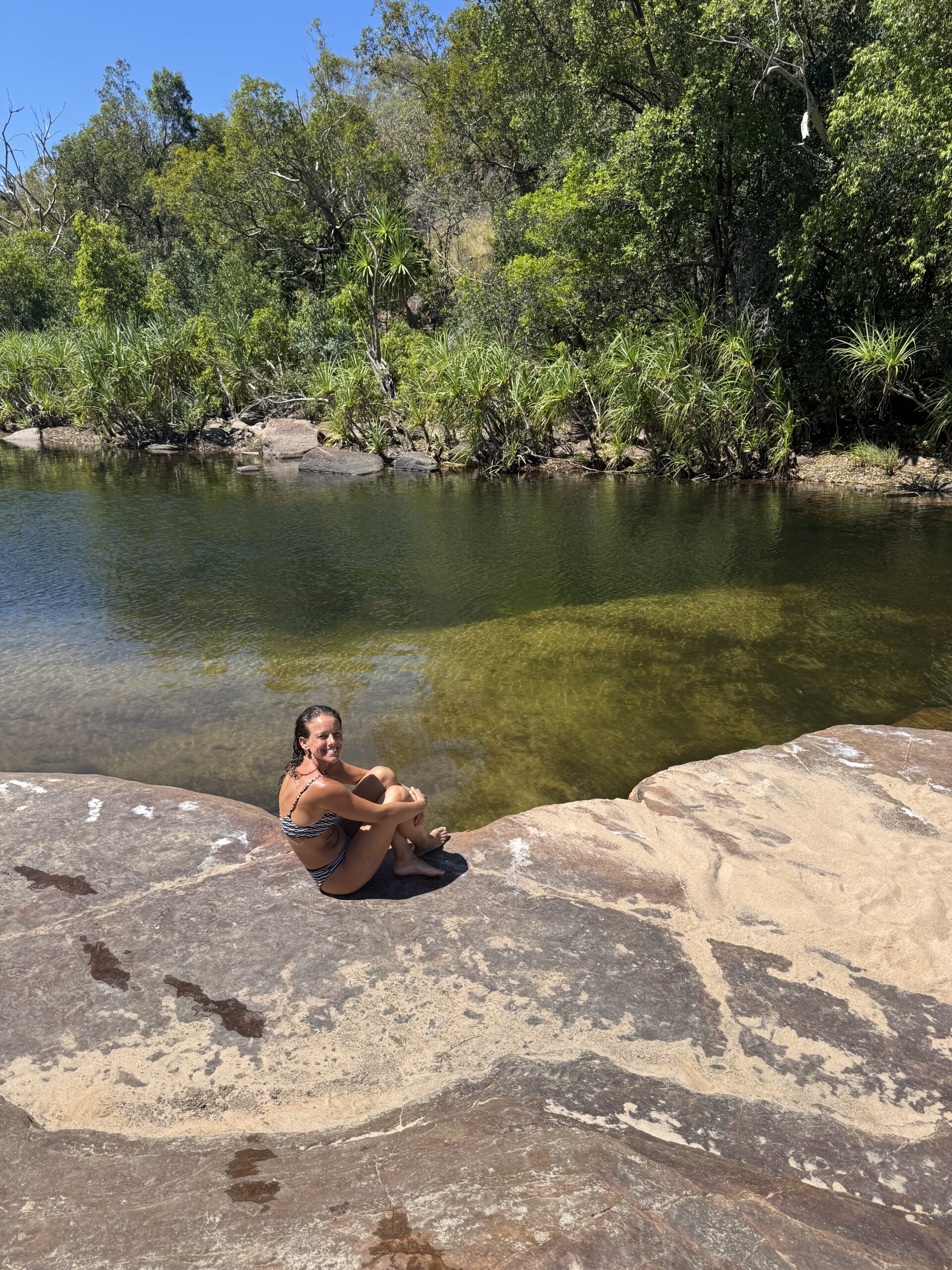
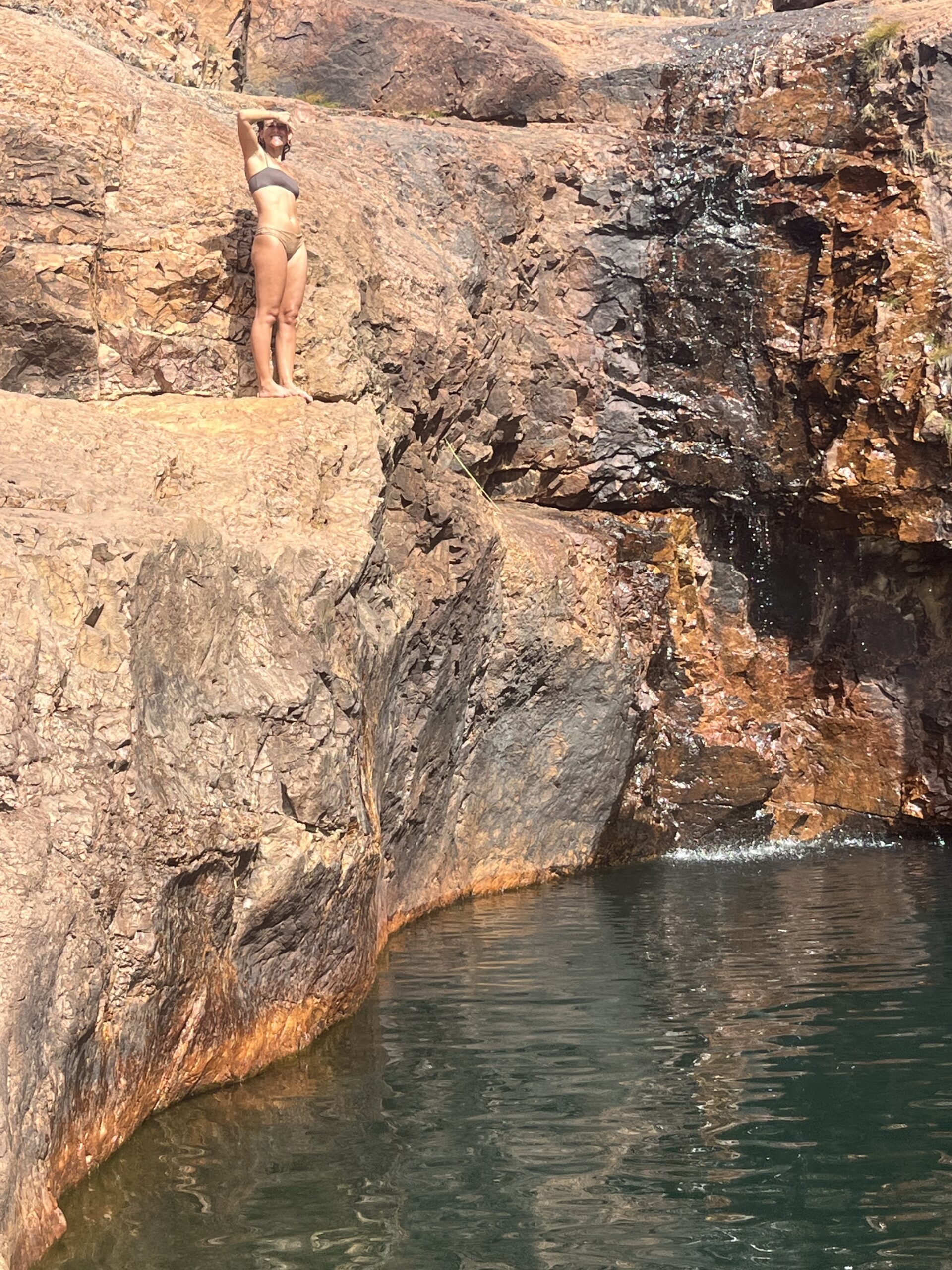
Here, you really feel a sense of authentic Australia. Kakadu doesn’t quite have the vibrant color palette that the Kimberley holds. There is a lot more brown in the landscape. But, it is a diverse place in many ways, having a variety of different landscapes from floodplains to rocky ridges and it is home to a range of endemic plants and animals. There are several rock art sites within Kakadu, some dating back thousands of years. It’s a great place to learn how the native people lived off the land and survived here. There are many waterfalls, some you can swim in during the dry season, but most of them you can’t due to the presence of salt water crocodiles. Even the falls that were considered swimmable held a slight risk. I opted to take my chances at these spots if there were other people already swimming. As you are hiking up the path to get to each waterfall and swimming area you always walk right past a croc trap just in case one tries to make its way up the stream. And, when you get to the pool, there would always be a sign that said something like “estuarine crocodiles can enter the water undetected at any time”. I told myself that there was no way one could sneak past the trap or that someone else would get eaten before me…hah. It was very hot here and I wanted to go swimming! What I find somewhat fascinating is that they don’t completely close the whole national park to swimming due to the risks. Even though there have been attacks in the past! Well that’s Australia for ya. Some of these pools had cliff jumps too which is always fun. The few times I found myself in the middle of a pool as people suddenly get out, it was a very unsettling feeling and I quickly followed suit.
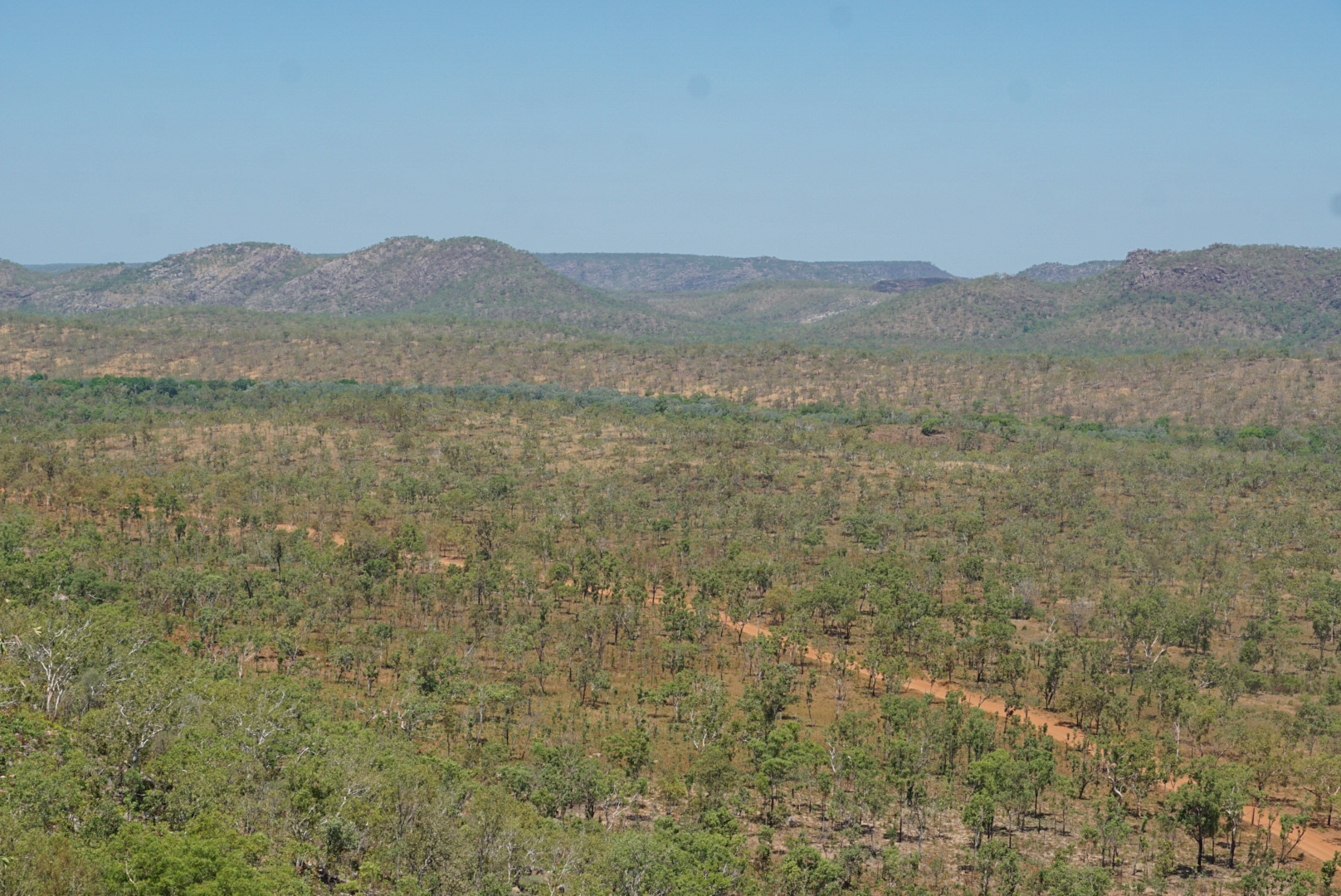
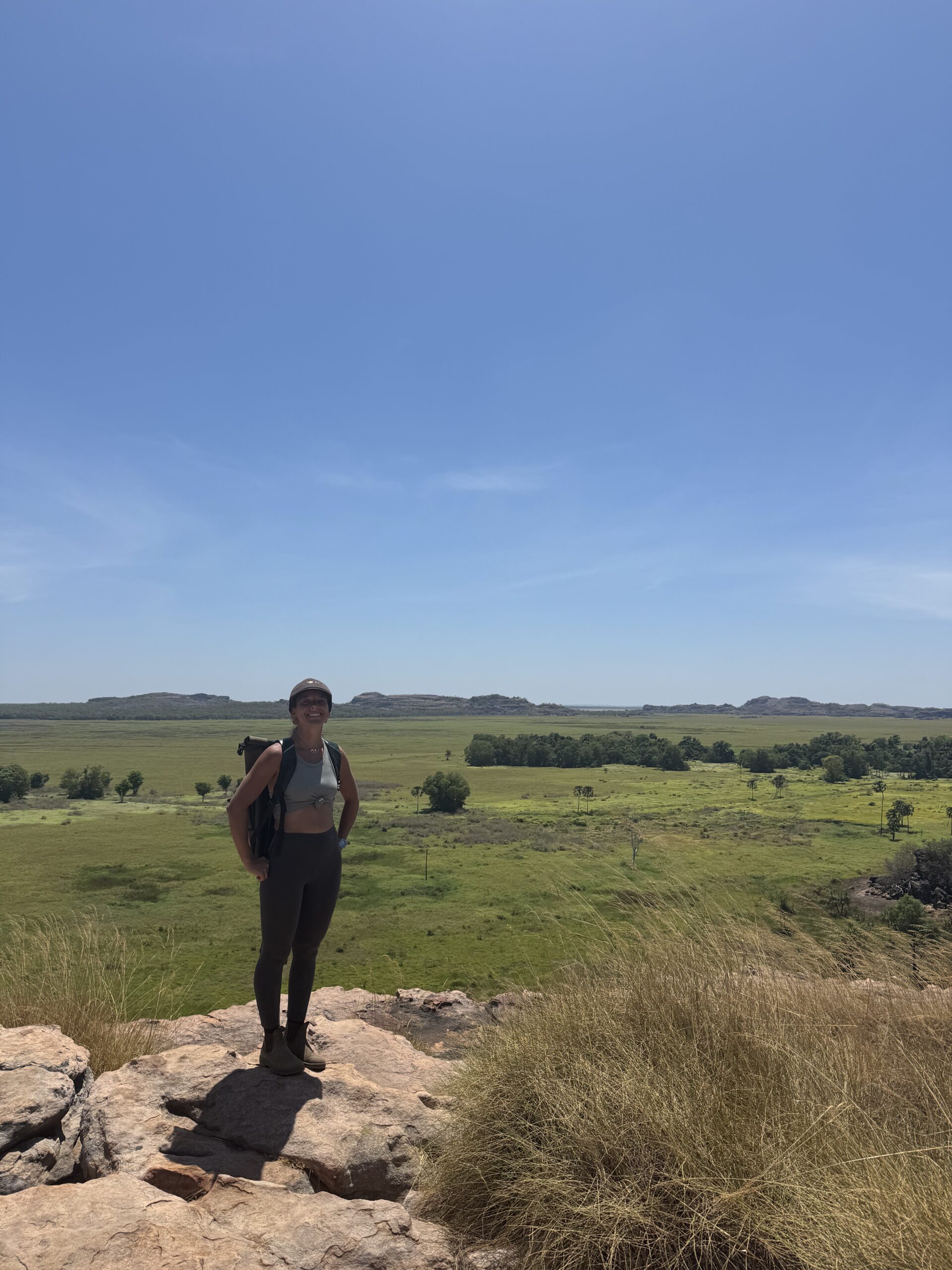
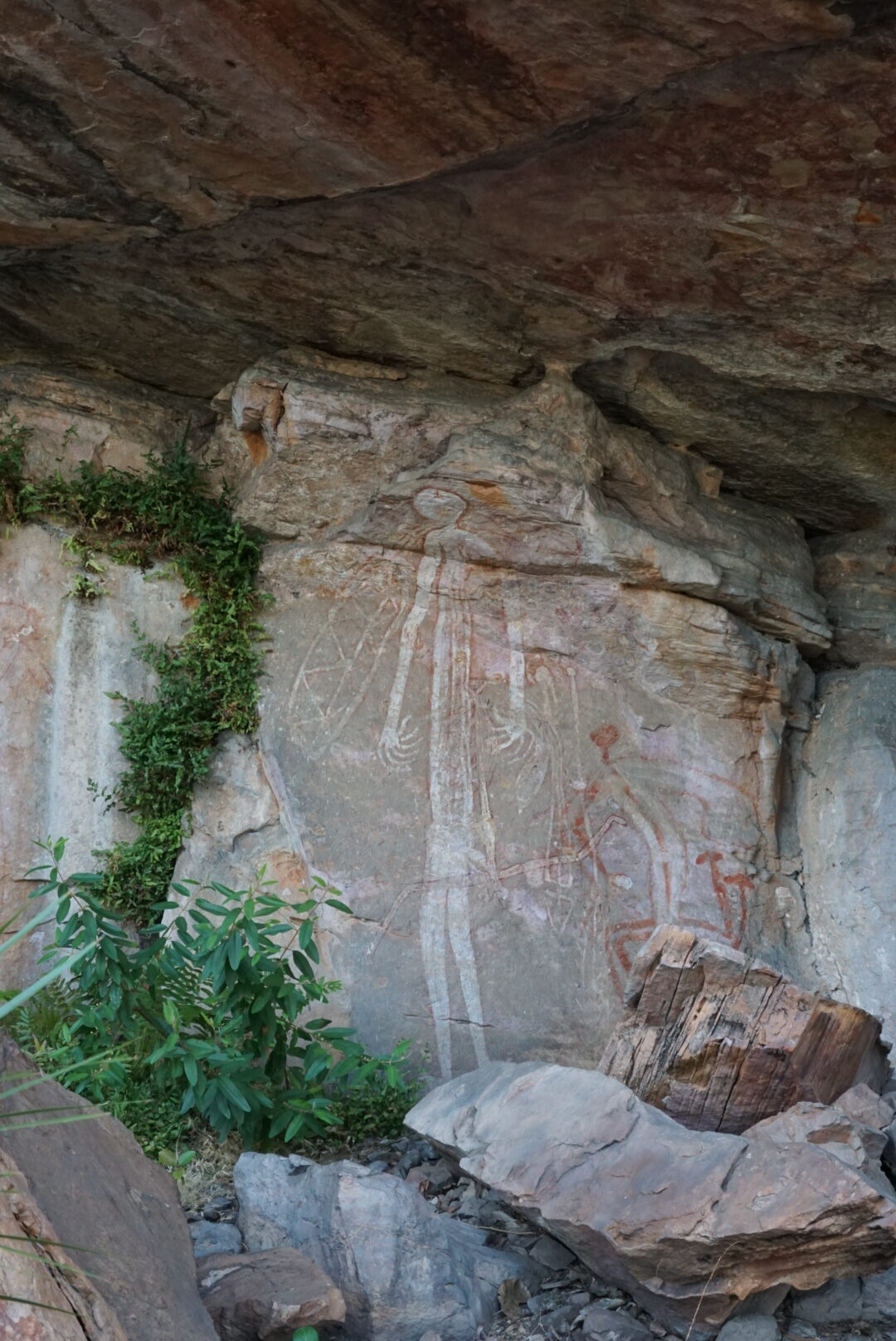
I had stayed in touch with my new friends John and Anthony and we were orchestrating a reunion here in Kakadu National Park as they were exploring it as well. It wasn’t until the more northern mosquito infested section of the park when I reached them. This is where most of the rock art sites are, and so the three of us spent a couple of days hiking around and checking it all out. There is so much cool art work to see there! During one of these hikes I experienced first hand the type of diverse landscapes that occur here. I walked up a rocky hill and gasped at the shock of seeing the most unbelievably vibrant green floodplain which seemed to appear out of nowhere. In virtually every other direction it was quite rocky and brown. Amazing.
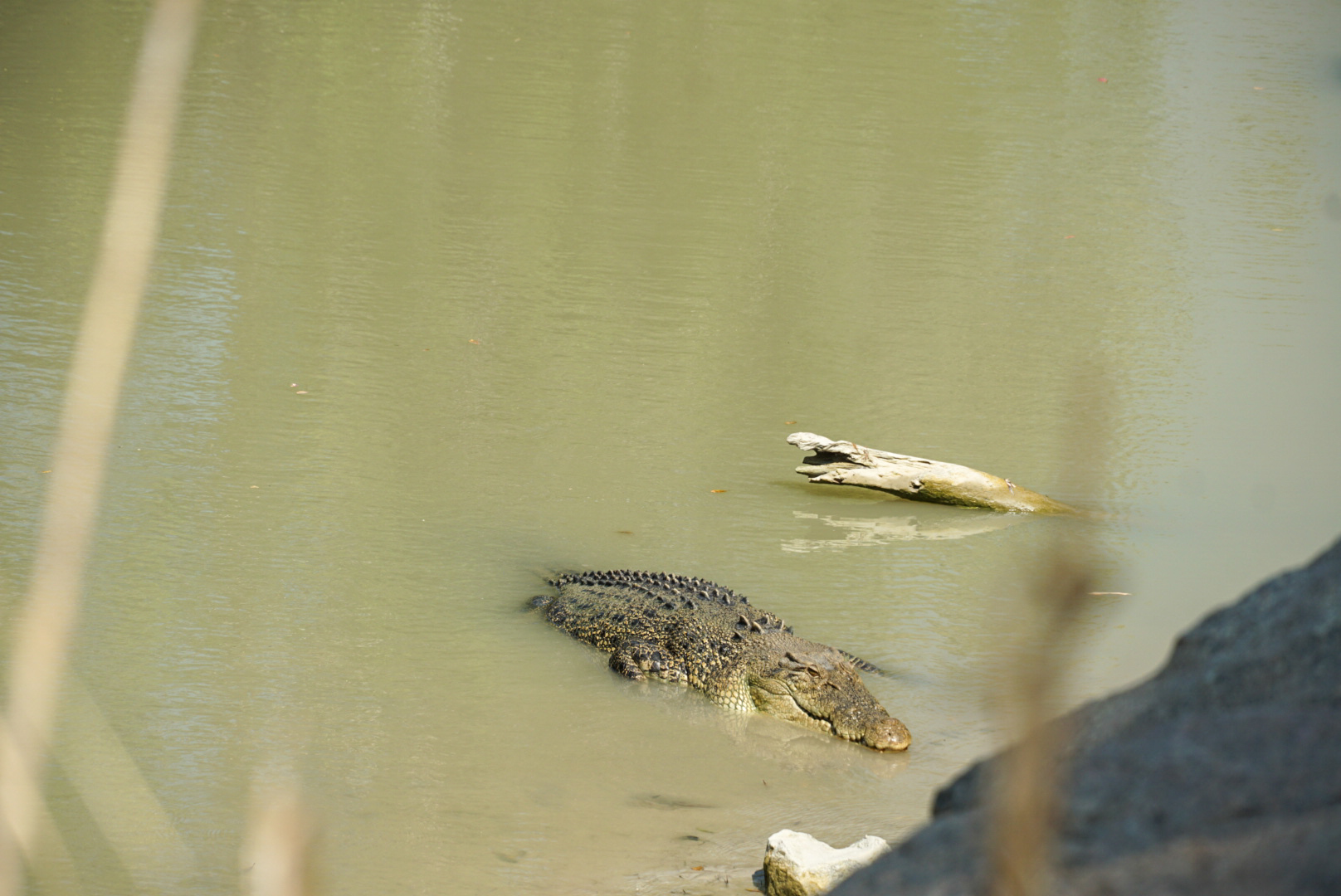
This is also where there is a legendary place to watch saltwater crocodiles! You can park up and watch salties in nature at a river crossing known as Cahills Crossing. They are concentrated in this area due to an abundance of fish swimming upstream. I felt I got my fix here and I was happy that it wasn’t with a tour. A lot of these crocs I saw were mostly submerged in the middle of the river, but I got a nice close look at one that came up onto the bank. And I watched in awe as a handful of people stood along the crossing road fishing…easily in grab range. People have been killed here.
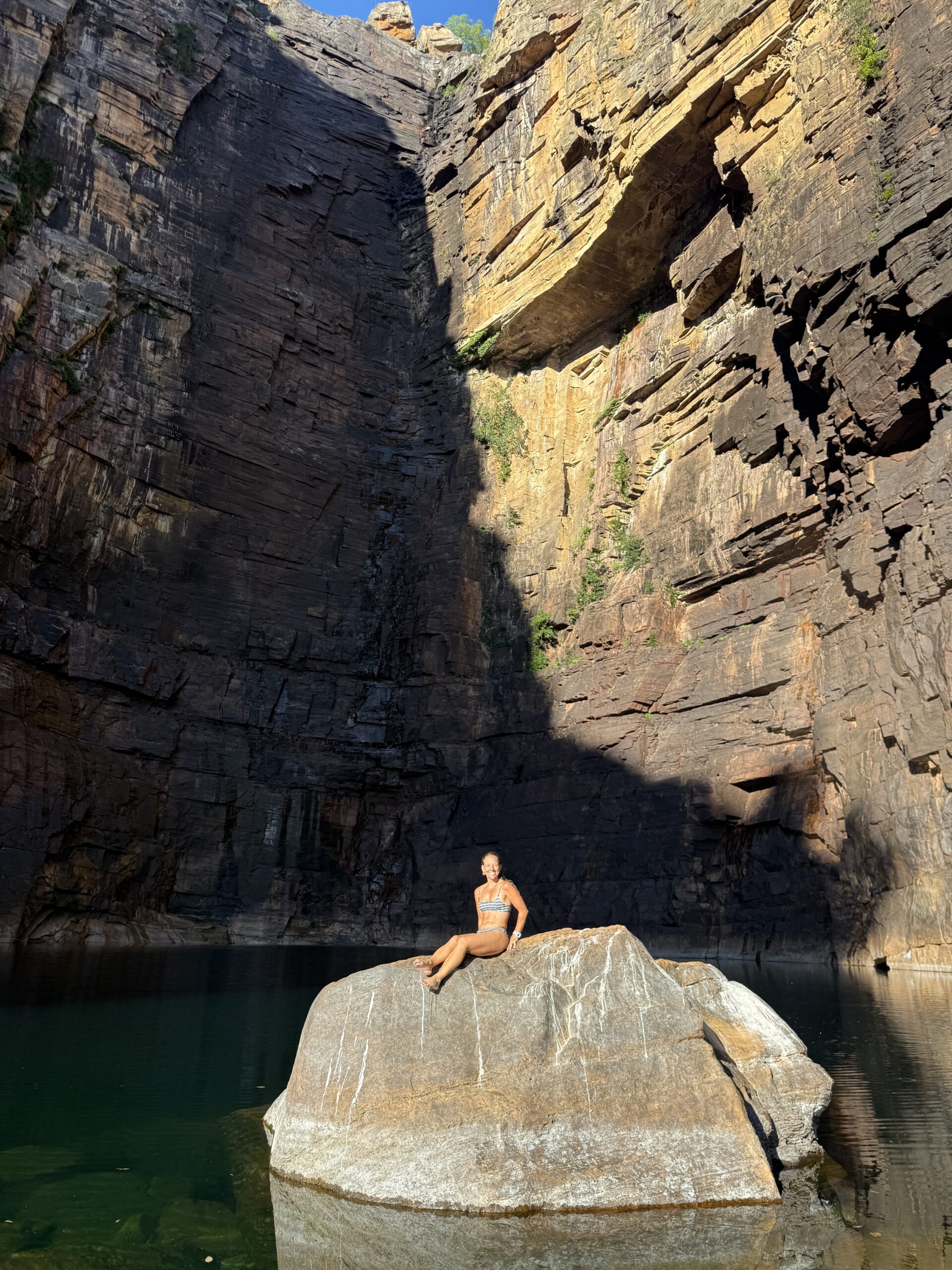
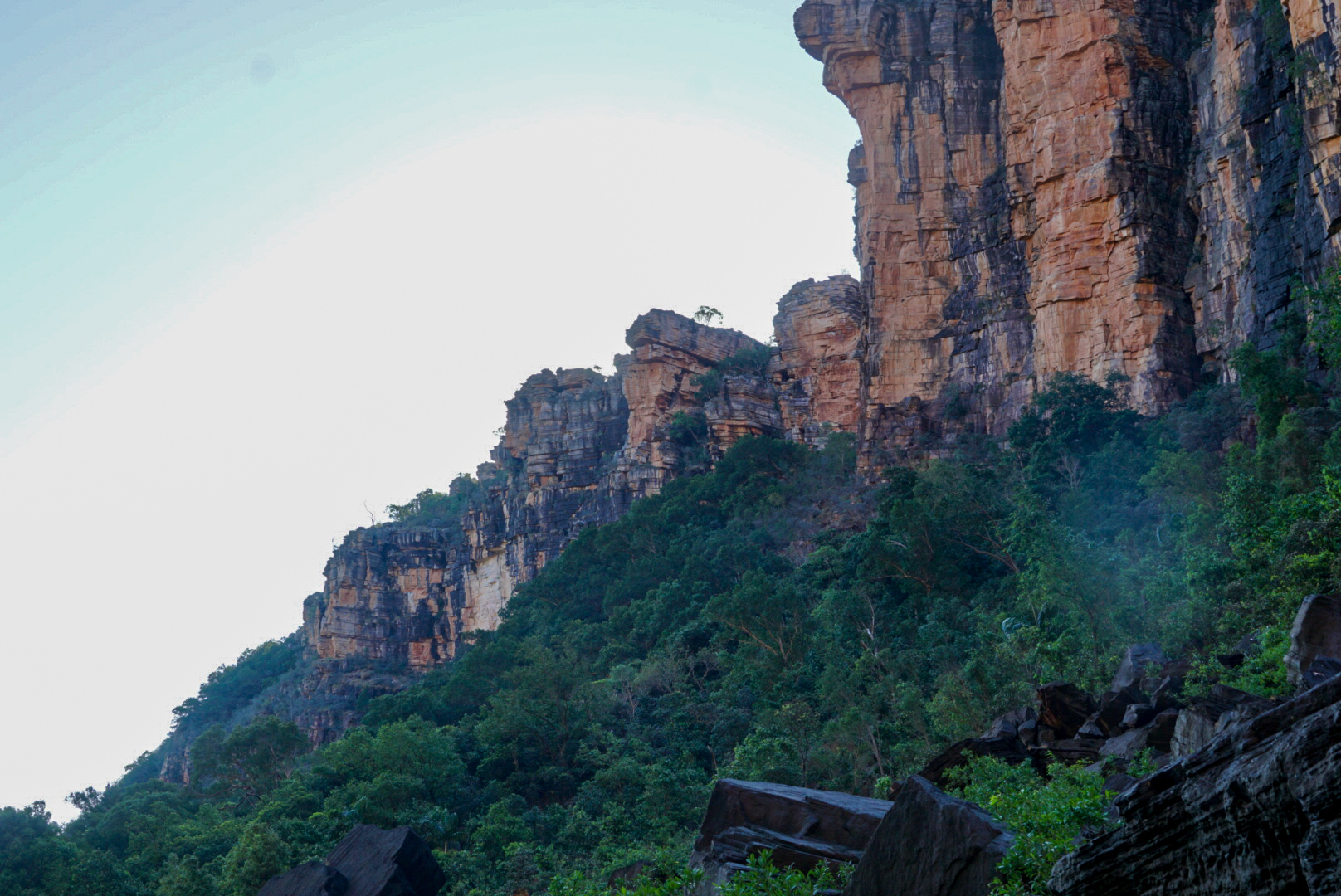
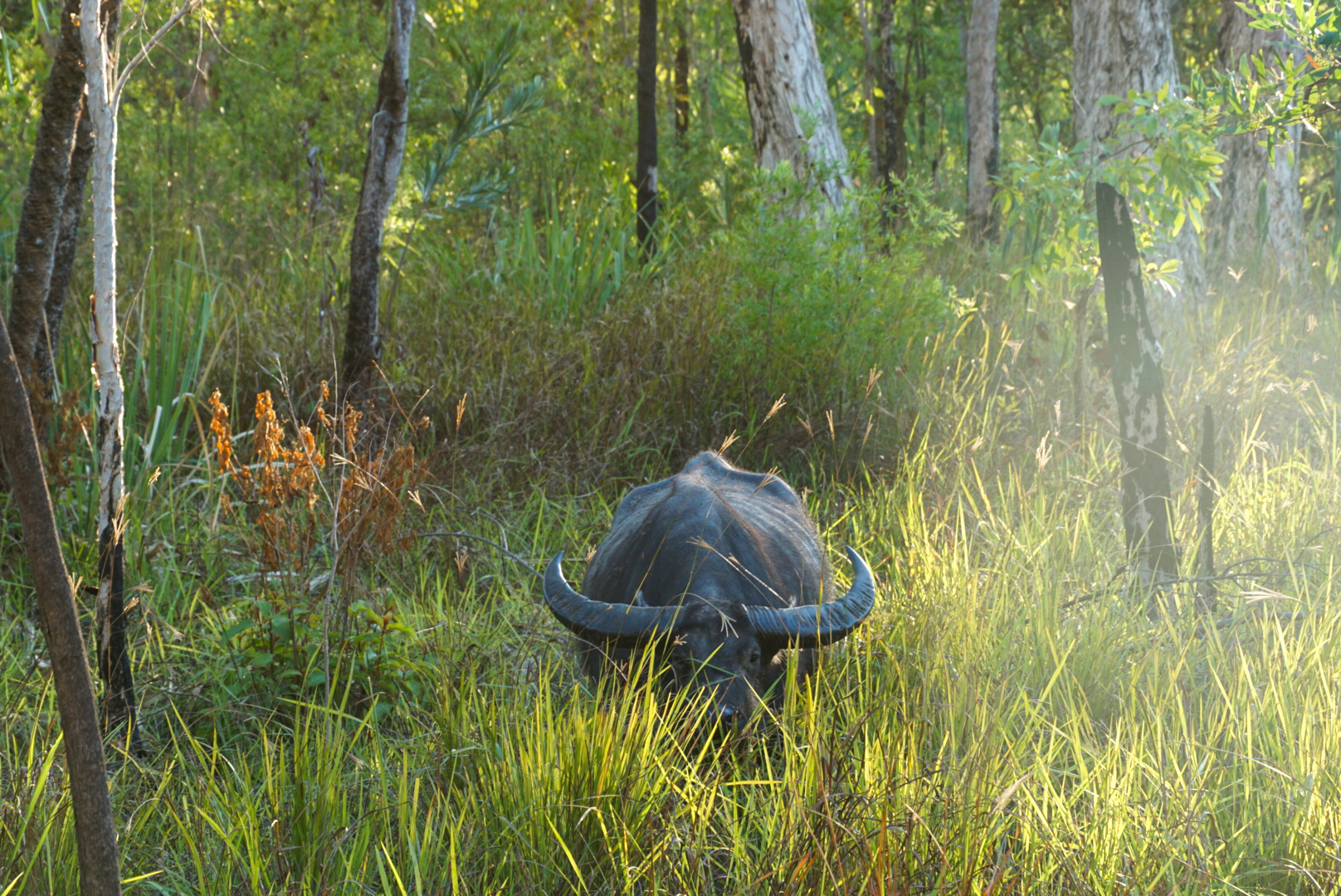
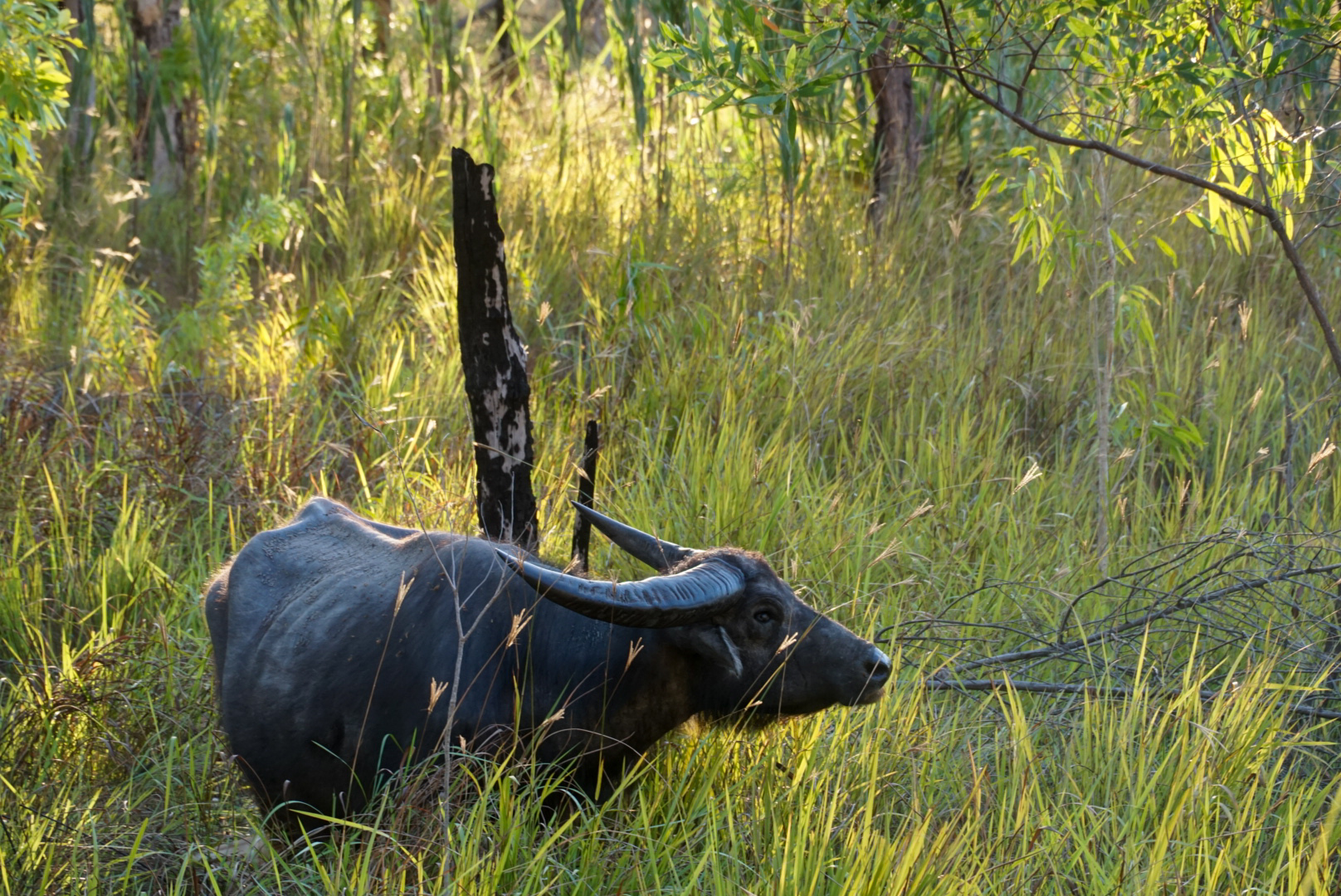
To wrap up Kakadu we took a super fun 4WD track up to a very large waterfall called Jim Jim falls. Unfortunately, it was barely flowing this late in the dry season. But, it felt like standing inside a giant amphitheater and was a beautiful (and slightly scary) spot for a swim. This spot also varied vastly from the landscapes I had seen thus far. The hike to this six hundred plus foot waterfall takes you through a forest of trees that are allegedly among the world’s oldest living plant species. And then you are making your way across large boulders in an open escarpment with towering rocky cliffs surrounding you. On the drive back to camp along the 4WD track we encountered a water buffalo! The water buffalo are just one of several species that were introduced here in Australia to serve some purpose (or for entertainment) and then eventually flourished, ultimately causing damage to the ecosystem. I knew they were in the area, but still it really caught me by surprise and I was so excited to be able to get a good look as I’d never seen one before.
Around this time, nighttime conditions were becoming hotter with each new day. My sleeps were growing increasingly sweaty. Yuck.
I was really enjoying exploring with John and Anthony! They are an incredibly entertaining duo. By day we were checking out rock art sites, hiking to waterfalls and cliff jumping; by night we had a card tournament going on, sometimes involving other members of the campground.
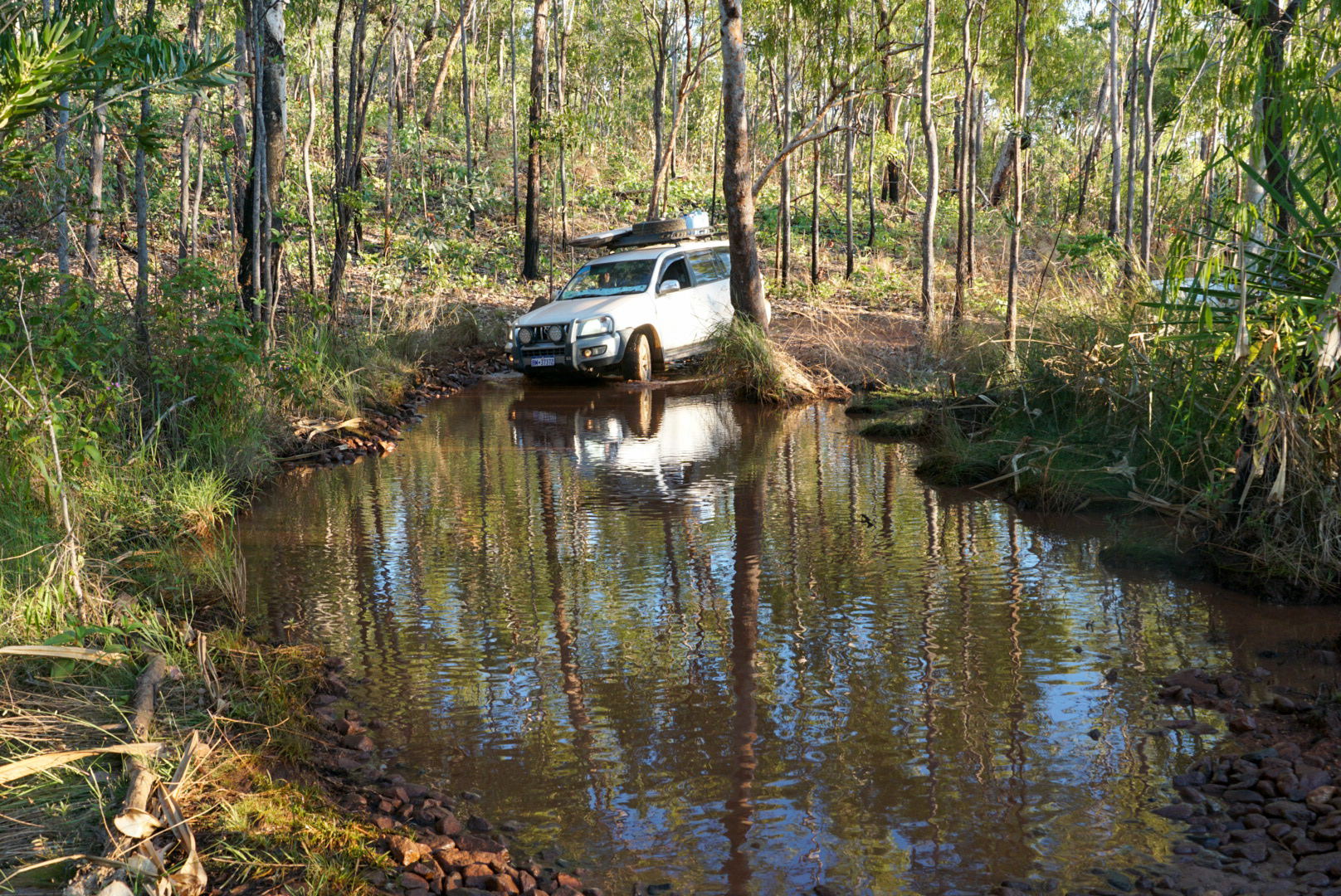
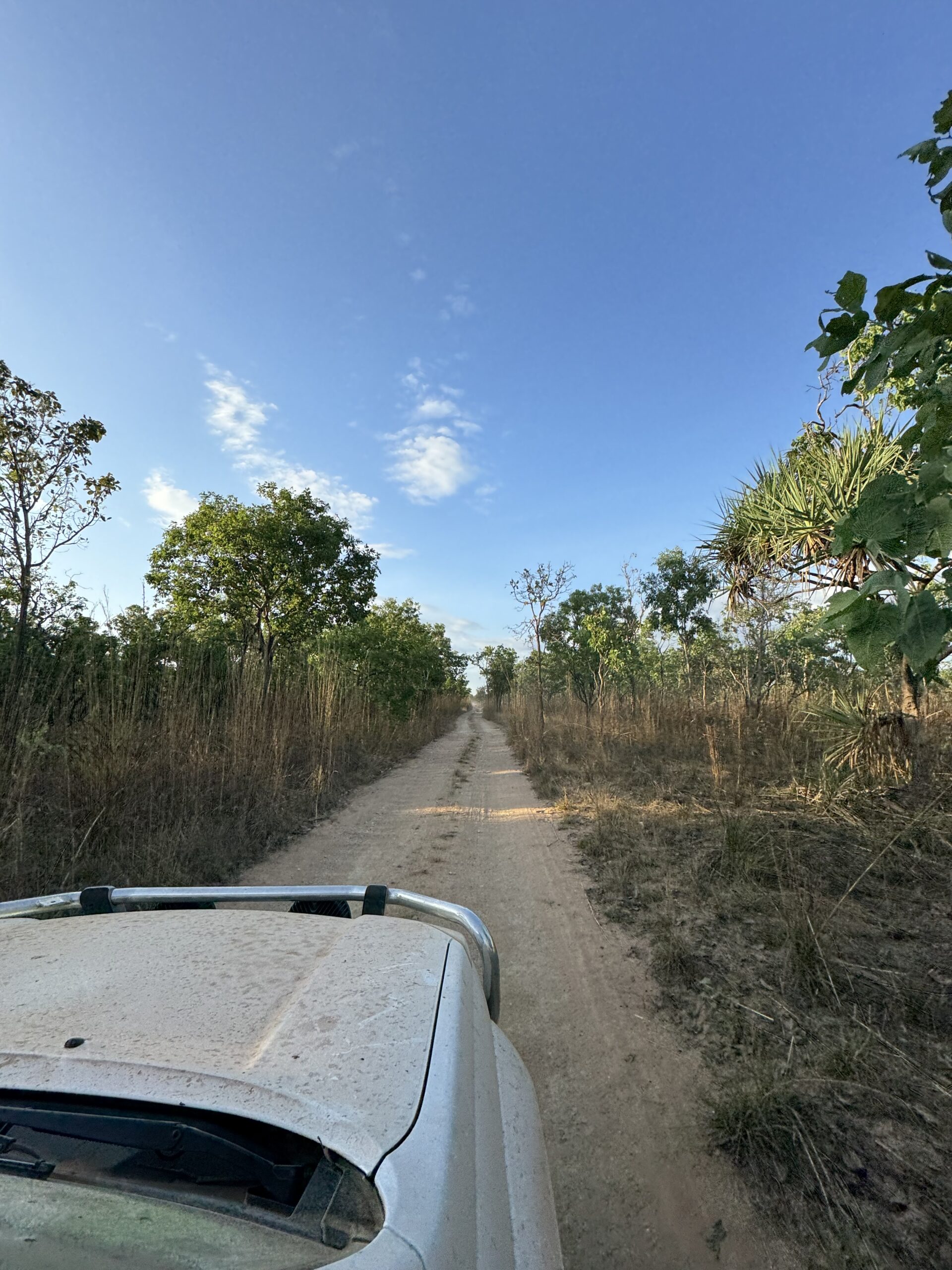
I think we only really scraped the surface of Kakadu National Park, but there was more on the agenda. There is another national park in the area called Litchfield. It is yet another place with an abundance of waterfalls and swimming holes. I have to say that I was somewhat unimpressed with this national park at first. It felt a little too touristy for me. I guess that’s due to the close proximity to Darwin and easy access to the falls.The paved walkways to water holes with handrails leading into the water takes away from the natural essence of it for me. However, we ended up on a 4WD track at the southernmost end of the national park. And this area was awesome. This track traversed across open plains of termite mounds, through some really cool and DEEP water crossings and led to some great waterfalls and swimming holes. This road was so much fun without being too rough or scary!
Below, I have included a couple pictures of the termite mounds I mentioned. I have driven past thousands of these during my time in the Northern Territory and have seen them in Western Australia too. It’s difficult to explain how it’s a really interesting and beautiful sight to behold.
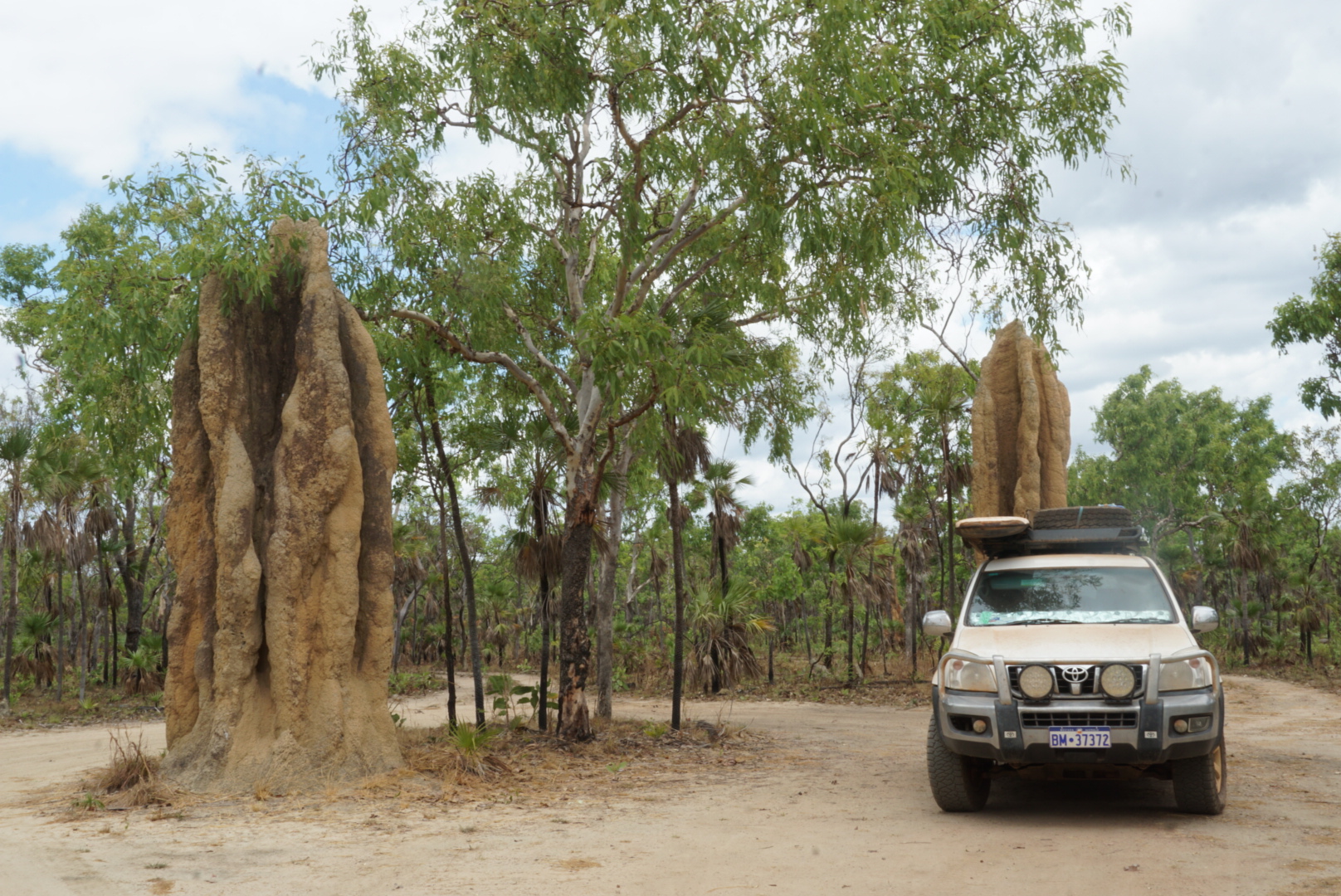
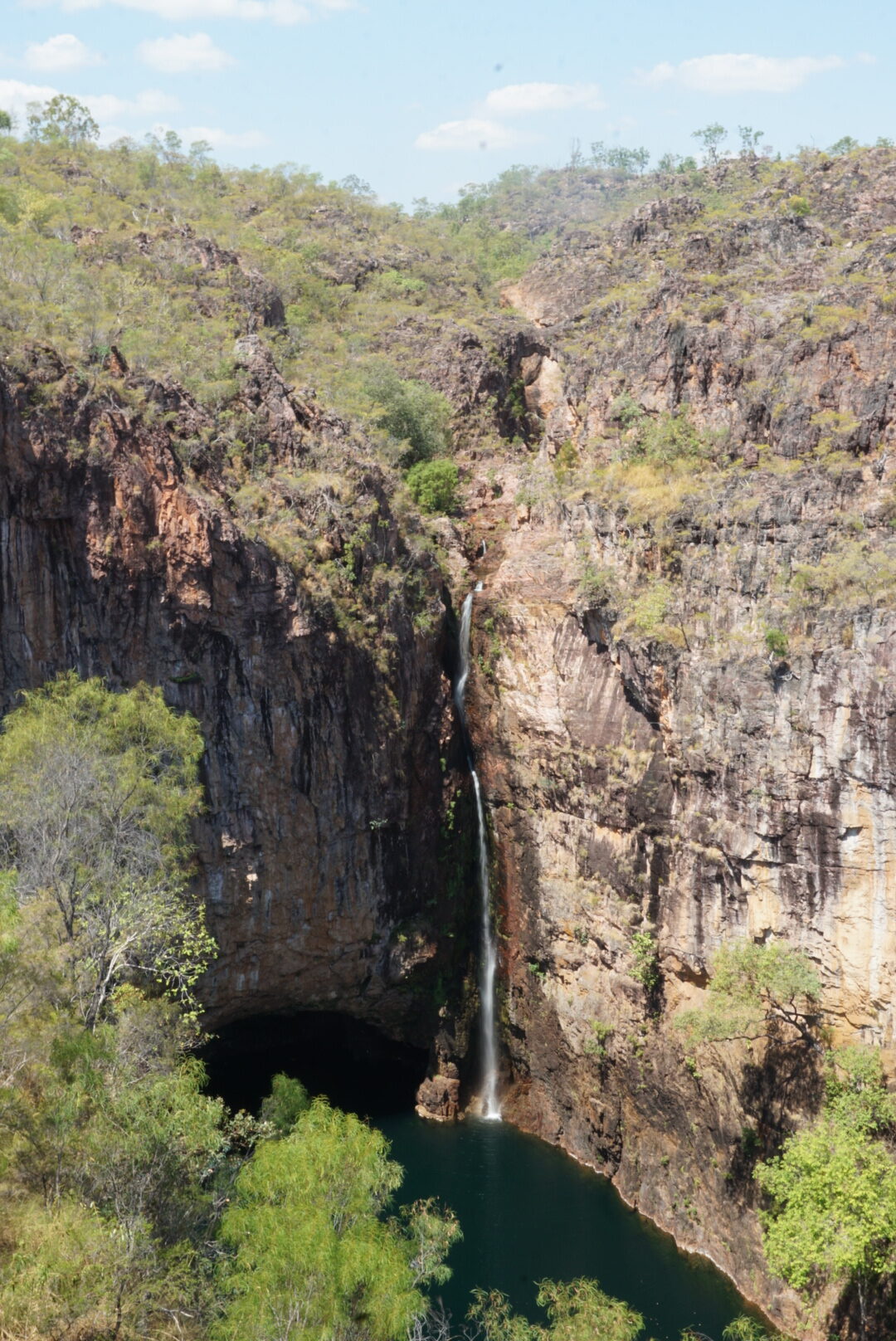
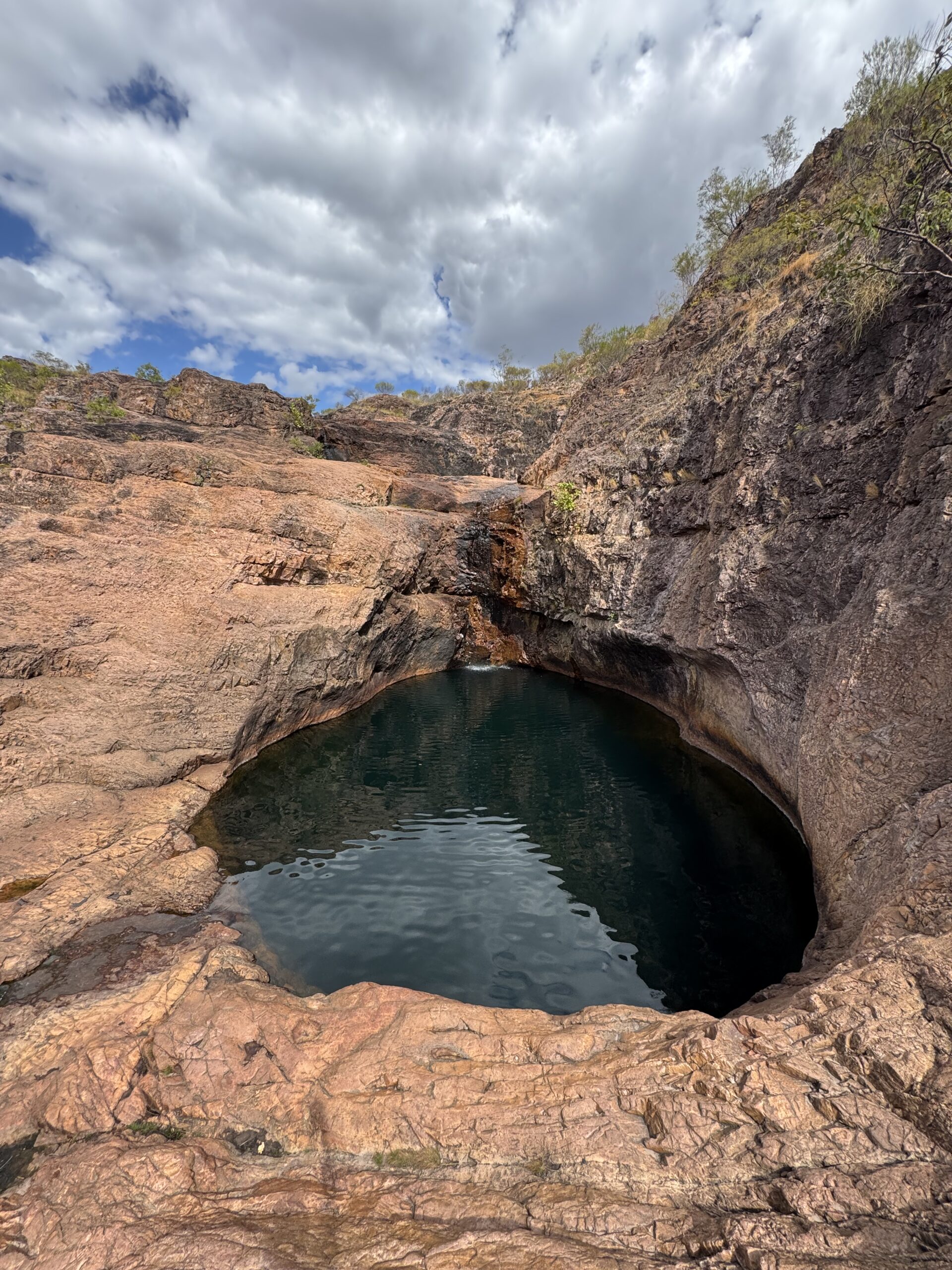
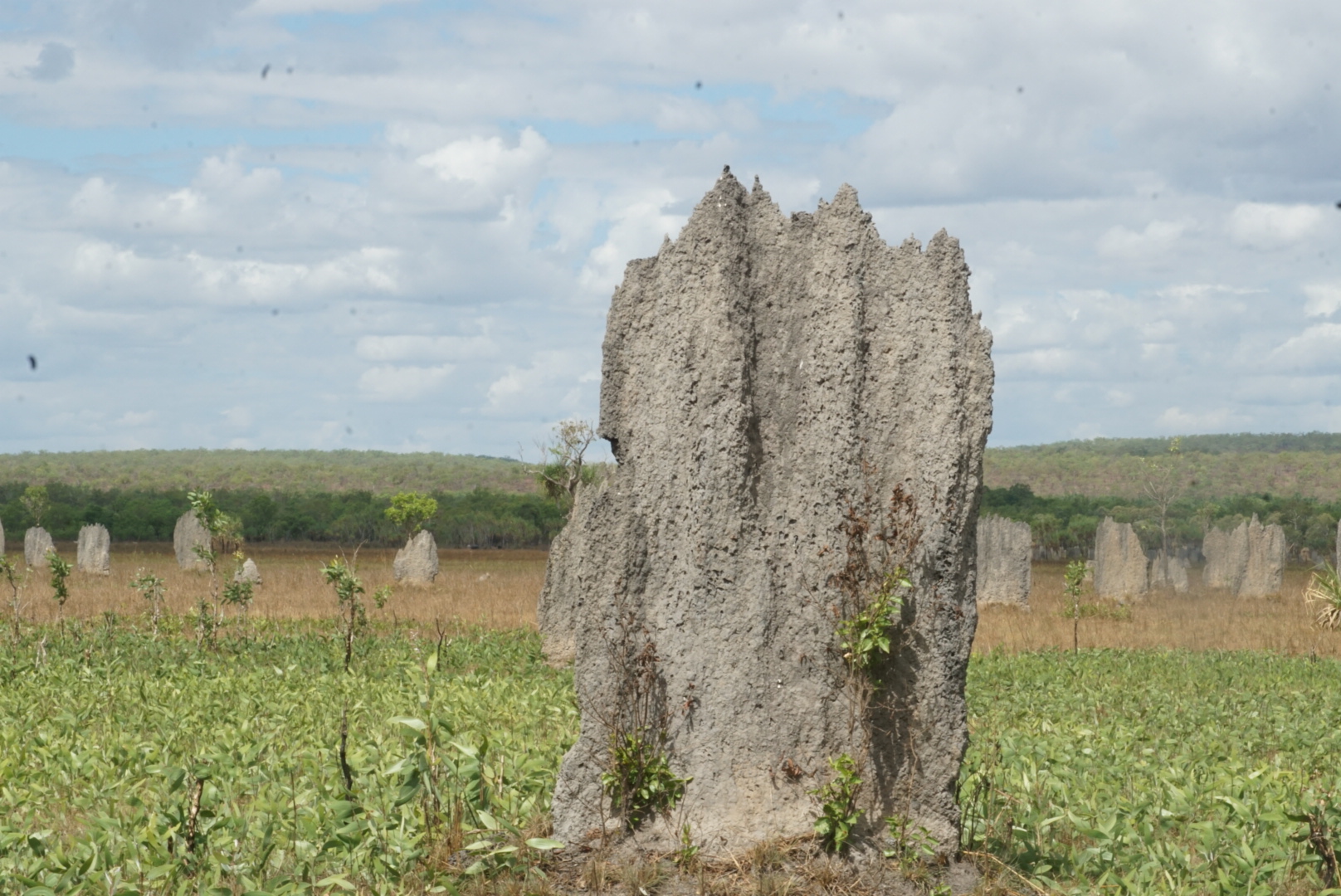
Once we had come to the end of the Reynolds River 4WD track and were back on the highway, it was time to say goodbye to my friends for good. They were beginning their journey back home to NSW and I was going to head up to Darwin for a few days. I felt grateful for my time spent with them in the outback, however unlikely the the friendship, and was sad to see them go.
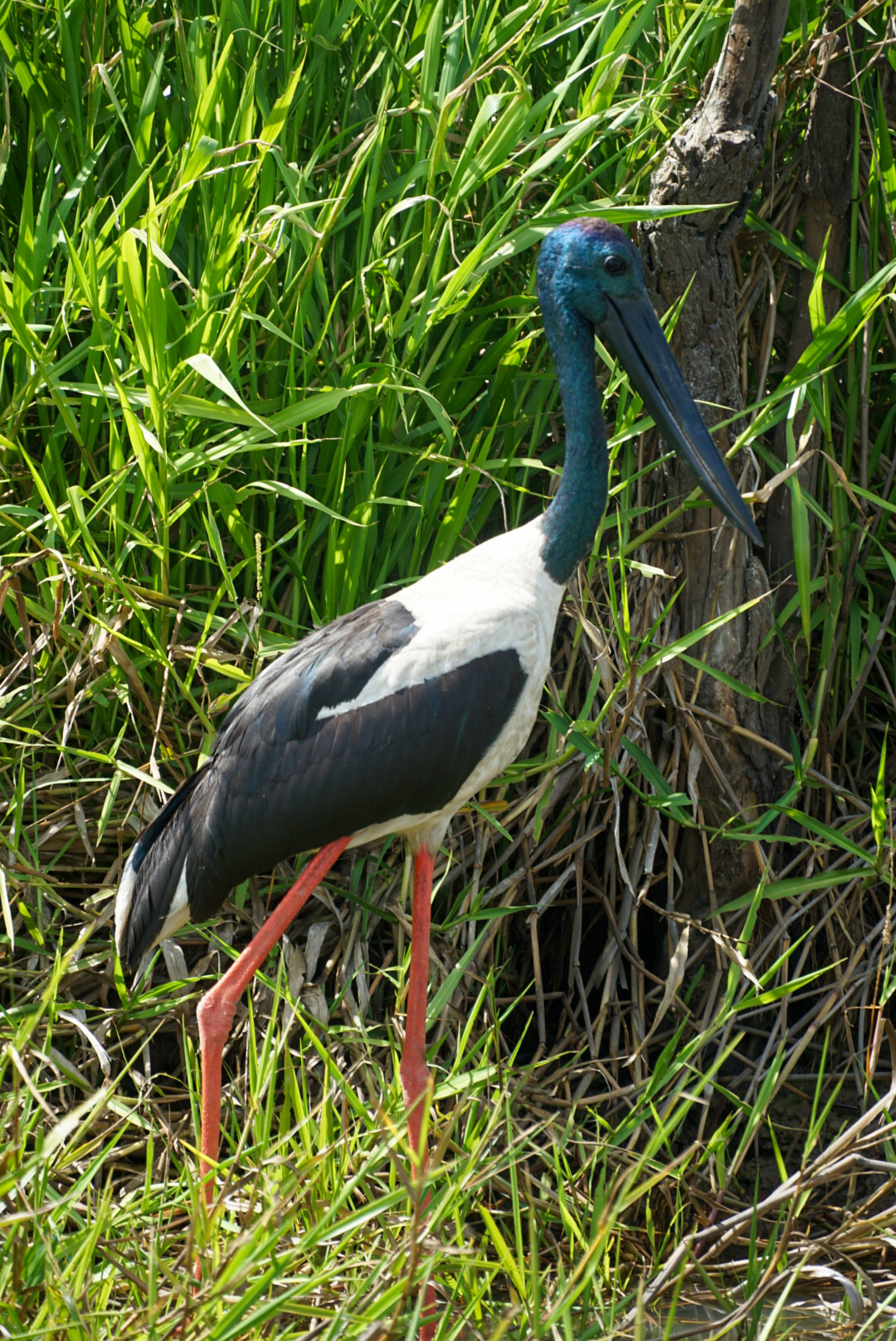
On my own again, I was headed up to Darwin. I was looking to feel the presence of Aboriginal culture within the city, discover the quirkiness I imagined it to have, and hopefully find a Jabiru (black-necked stork).
I quickly noticed that I didn’t like Darwin or it’s vibe at all. I didn’t get it. The people I know who love it REALLY love it. I couldn’t get there. I was disappointed in the lack of cultural influence I felt and the beaches I visited were nothing to note (for my taste). There was no chance of swimming in the ocean (safely) unless you went to a netted swimming area which reminded me of a pool in a theme park. I did find a really pretty fresh water spring area to swim in which I enjoyed.
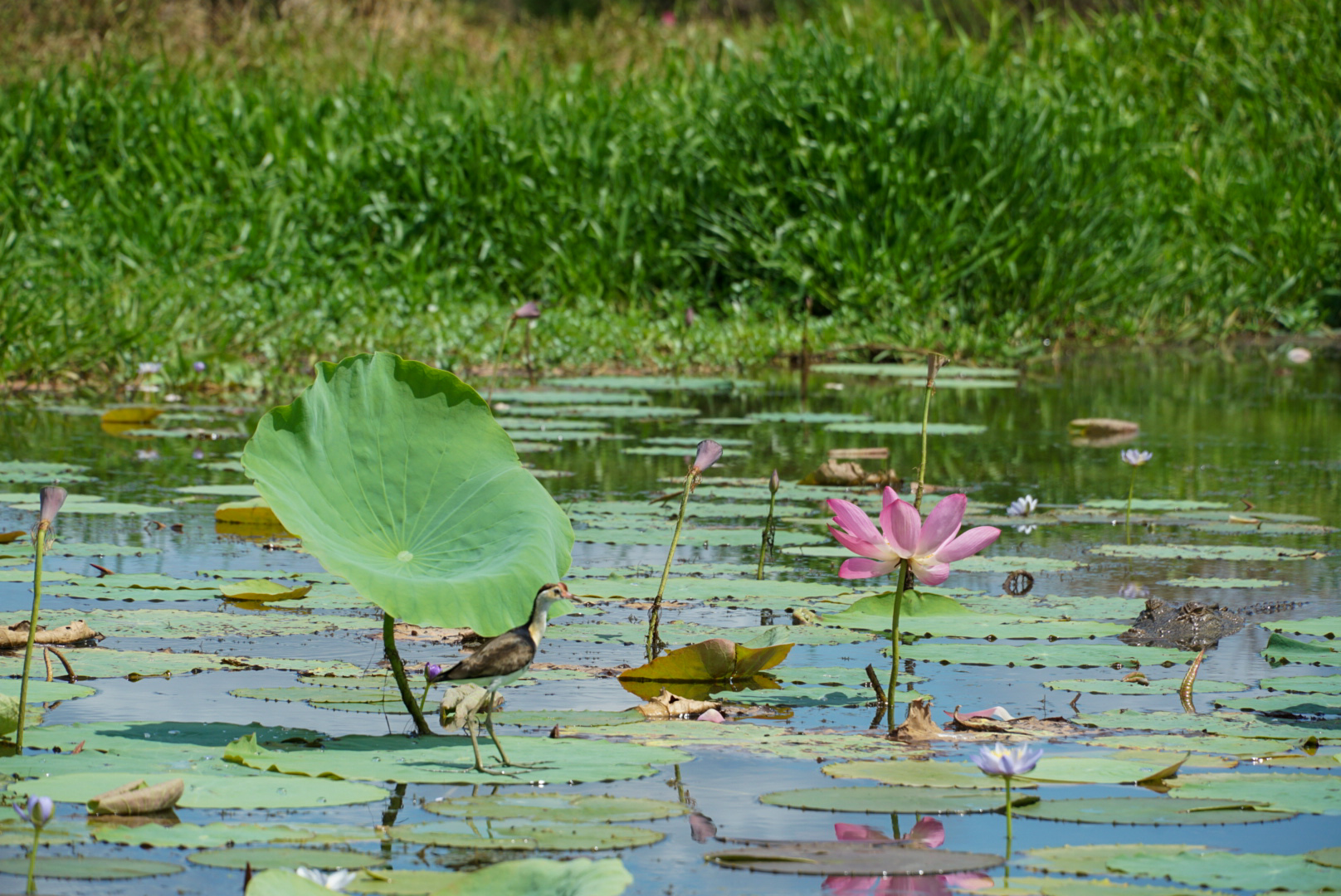
Despite making three different visits to a swamp area in search of the black-necked stork I was unsuccessful as locating one. After some consideration, I decided to go on a wetland tour with a small company. I’m really glad I did! With this tour I got to navigate up through the wetlands and really get into nature. It felt a lot like Florida. But, it wasn’t overly touristy and I got to see my stork up close along with some more salt water crocodiles. I learned some interesting facts on this tour. For example, that estuarine crocodiles do not need saltwater to survive and they have a special gland that allows them to inhabit the ocean. Perhaps most impressively, they have an amazing ability to get back to their original location if ever relocated. They have been known to travel as far as about four hundred miles to do this. Sadly, this limits their options when they become a nuisance in public areas. The two courses of action are either a life in captivity or to be killed.
Now that I saw what I wanted to see, I couldn’t get out of here fast enough. And I was really itching to get back to the coast and specifically the Great Barrier Reef while the weather was still good. And I had a long drive ahead of me!